Ayia Napa Sea Caves Cliff Jumping Is Now Closed
If you've been on TikTok looking at Cyprus content this season, you've probably seen the videos: people leaping from 10-metre limestone cliffs into the turquoise water below, the famous mushroom-shaped rock at the top of the Ayia Napa Sea Caves. And then, newer videos showing the same spot blocked off — metal fencing, signs telling visitors to stay back from the edge.
This is the Ayia Napa Sea Caves, just east of town at the edge of Cape Greco National Forest Park. The cliff jumping that made this spot famous on social media is now officially closed off. The fencing went up after a series of accidents this season and is expected to stay. If you've been planning the jump for your Cyprus trip, here's what's actually closed, why, and how you can still experience the caves — including the parts the fence doesn't reach.

What's Closed and What Isn't
The Ayia Napa Sea Caves are a network of natural limestone caves and rock formations stretching along the cliff edge between Ayia Napa and Cape Greco. The most photographed part — the section locals sometimes call the "palace caves" because of the mushroom-shaped rock formation above them — is where most cliff jumping happens. That's the section now fenced off.
What's closed:- Access to the cliff edge above the main jumping area
- The mushroom rock formation itself
- The jumping platforms that became popular on Instagram and TikTok
- The cliff path viewpoint, set back from the edge — you can walk to it, take photos, see the formations clearly
- The wider Sea Caves area along the coastline (cliff jumping was concentrated at one specific section)
- The caves themselves — you can still see them from the cliffs, and you can still access most of them by sea
- Cape Greco National Forest Park as a whole — hiking, the lighthouse, Konnos Bay, all open as usual
Why the Fencing Went Up
Two reasons, both well-documented.
- Accidents. The 10-metre cliffs look manageable on TikTok, but the water below has submerged rocks at certain points, the depth varies, and there's no way to gauge it from above. There've been multiple serious injuries over recent seasons — broken limbs, spinal injuries, and at least a few incidents where divers needed emergency evacuation. The closure follows a pattern: the area has actually been fenced before during previous seasons when accidents spiked, and reopened later. This year, the authorities have made it more permanent.
- Erosion and overuse. Constant foot traffic on the same cliff sections accelerates the natural erosion that creates the caves in the first place. The mushroom rock and several of the cliff platforms have been monitored for stability, and parts of the limestone are genuinely starting to give way under repeated use.


How You Can Still Experience the Sea Caves
The closure affects the cliff jumping, not the caves themselves. There are still several ways to see the formations properly, and a couple of them are actually better than the original Instagram experience.
From the Cliff Viewpoint
Free, accessible by car or bus from Ayia Napa town centre. Park near the marked viewpoint, walk along the cliff path to the safe viewing area, and you'll have a clear view of the caves and the mushroom rock from a respectful distance. Best at sunrise or late afternoon — midday in summer is brutally hot on the exposed cliff path. Bring water, wear proper shoes (it's rocky), and don't try to climb past the fence.From the Sea
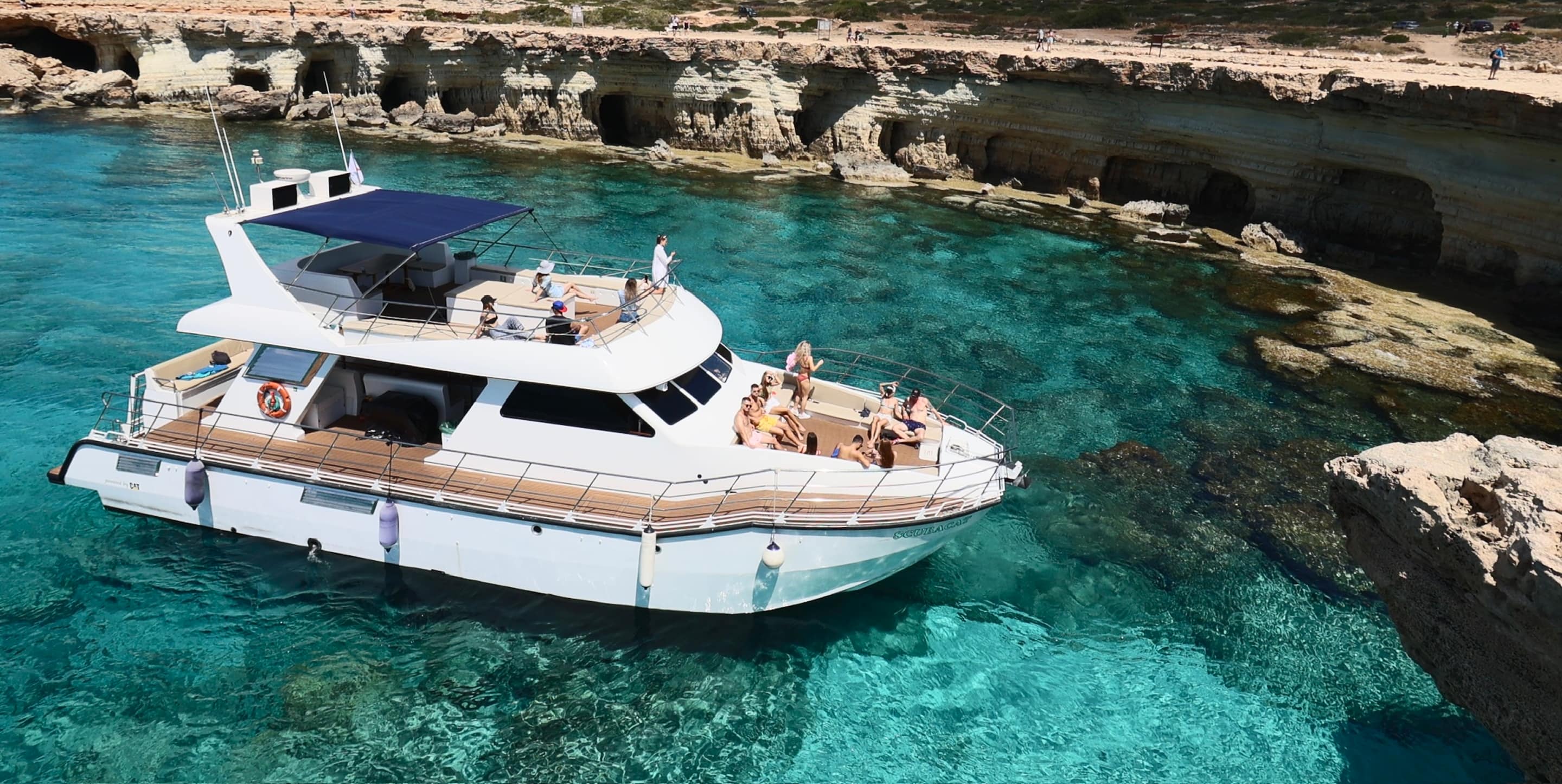
This is the option most visitors don't think of. Boat trips from Ayia Napa Harbour pass directly along the base of the cliffs on the way out toward Cape Greco. From the water, you see the caves from inside — boats can move into the cave mouths at the right anchorage, you look up at the formations rather than down on them, and the mushroom rock is far more dramatic from below than from the cliff path. The fences don't extend to the sea; you're seeing the caves from the angle nobody ever sees them from the road.By Kayak
Several operators around Ayia Napa and Konnos Bay run guided kayak tours into the caves. A different feel than a catamaran — slower, closer, lets you paddle directly into the cave mouths and see the rock formations from sea level. Worth it if you want a more active version of the experience.Snorkelling Around the Cave Entrances
The water around the cave mouths is clear, deep enough to be interesting but shallow enough at the edges to be safe, and reaches 20+ metres of visibility on a calm morning. You won't be jumping in from a cliff, but the snorkelling around the cave entrances is genuinely good — better than most people expect.What This Looks Like on a SCUBACAT Cruise
Our morning cruise leaves Ayia Napa Harbour at 9:30 am and runs a 4.5-hour loop along the southeastern coast. The route passes:
- Ayia Napa Caves — a smaller network of coastal caves just east of the harbour, at the start of the route. Viewed from the water with full access to the cave entrances.
- Love Bridge — a smaller natural arch closer to Ayia Napa, popular for wedding photos, seen from below as we pass.
- The Sea Caves at Cape Greco — the larger cave complex further along the cape, including the mushroom rock formation above the closed cliff-jumping section, seen from below.
- Cape Greco lighthouse and Royal Bay — the dramatic cliffs along the cape's edge.


A Few Things to Know
- Don't hop the fence. Beyond the obvious safety risk, there are fines for unauthorised access, and your travel insurance almost certainly won't cover any injury that follows.
- The viewpoint is still worth visiting. Even from a safe distance, the cliff view is spectacular, especially around sunset.
- The boat view is genuinely different. Not better or worse than the cliff path — just a completely different angle on the same coastline.
- Cliff jumping is still happening elsewhere in Cyprus (at your own risk, no endorsement here), but the Ayia Napa Sea Caves specifically are no longer one of those places.