How to See Turtles in Cyprus: A Practical Guide for Ayia Napa, Protaras, and Cape Greco
If you're coming to Cyprus and want to see sea turtles in the wild, the southeastern coast — Ayia Napa, Protaras, and the Cape Greco peninsula between them — is the most reliable part of the island for it. Two species are common in these waters; the bays around Cape Greco produce regular sightings throughout the swimming season, and a half-decent morning with a mask is often enough.
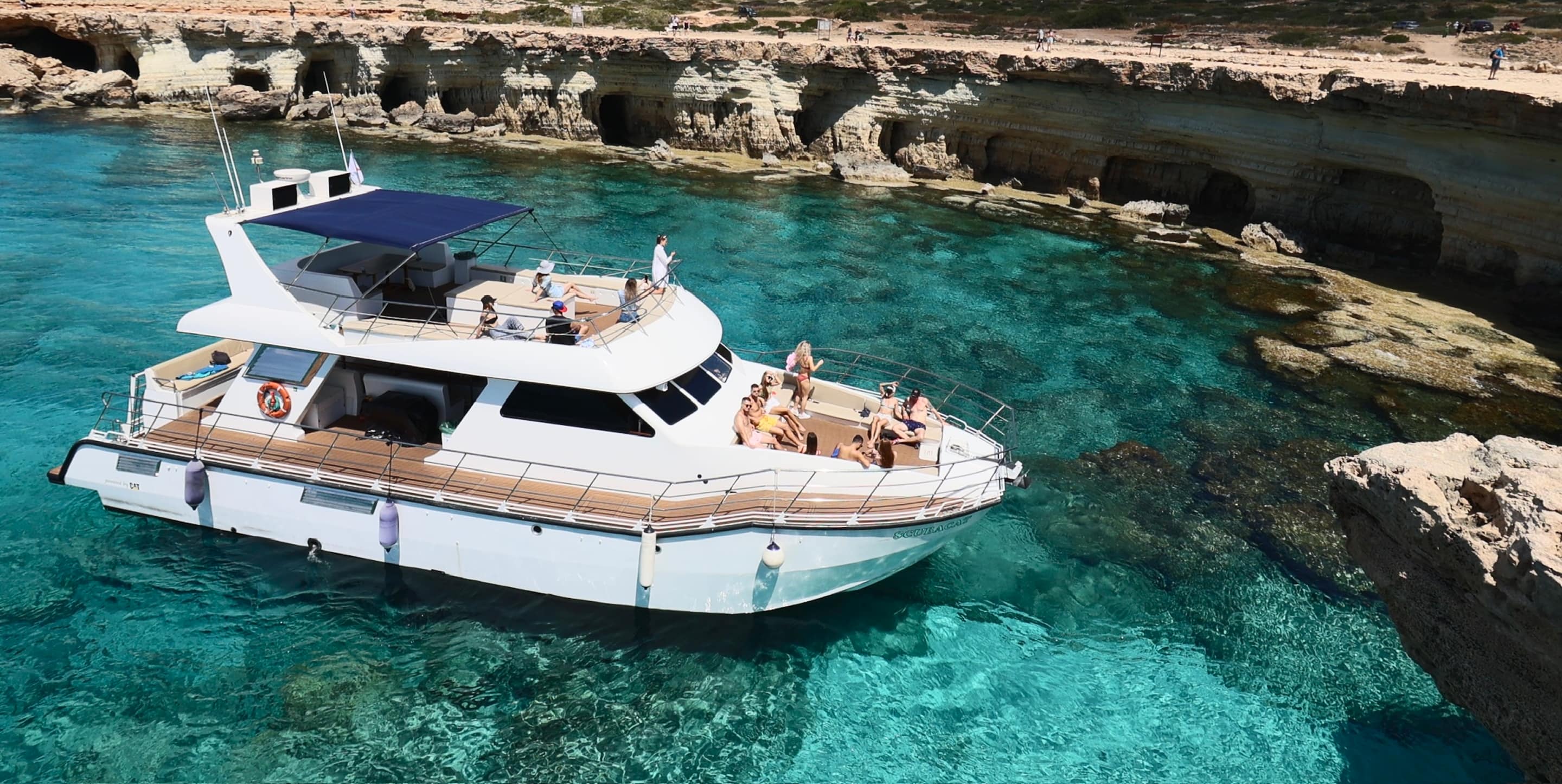
This guide walks through where to go, when, and what to actually do once you're there. We're SCUBACAT — we run turtle cruises out of Ayia Napa Harbour — but most of this advice works whether you book with us, with someone else, or just rent a snorkel and swim out from shore.

Which Turtles You're Likely to See
Two species live in Cypriot waters, and you can encounter either on a typical morning swim around Cape Greco.
- Green turtles (Chelonia mydas) are the species you're most likely to spot. They're herbivores and spend long stretches grazing on seagrass beds, which makes them easier to find and photograph than turtles constantly on the move. Adults are around a metre in shell length; most you'll see in the bays are juveniles, somewhat smaller. The name comes from the colour of the body fat, not the shell.
- Loggerheads (Caretta caretta) are larger, broader, and more active swimmers. They're the species that nests on Cyprus beaches in summer — Lara Bay in the west and parts of the Akamas Peninsula are the main protected nesting areas. You'll see loggerheads in the water year-round, usually moving with more purpose than the grazing greens.
The Spots That Actually Work
Cyprus has plenty of coastline, but turtles aren't evenly spread along it. After years of running this route, the bays around Cape Greco are consistently where other operators and we find them.
Konnos Bay (also known as Turtle Bay)
A picturesque horseshoe bay just inside the Cape Greco park, with calm water and a sandy seabed in the middle. Konnos is one of the most reliable spots for turtle sightings — it's sheltered from the prevailing wind, and there's seagrass on parts of the seabed for greens to graze. Tour operators often refer to the wider area around Konnos as "Turtle Bay" or "Turtle Cove", since this stretch produces the bulk of sea turtle encounters on the southeast coast. The names overlap and aren't entirely consistent across operators, but Konnos is the formal name of the bay itself. You can swim out from shore here if you have your own gear, or visit by boat — most turtle cruises anchor here, including ours. The bay gets busy in summer, especially after 10 am. Earlier is quieter, with better water clarity and more active turtles.Cape Greco
Cape Greco is a protected national forest park covering 385 hectares of cliffs, pine forest, and coastline. The water along its edge has visibility to 8 metres on a good day, and the marine life is among the best preserved on the southeast coast. Several of the bays inside the park — Konnos most notably — are turtle territory, but the cape's main pull is the coastline itself: sea caves, the natural rock arch known as Love Bridge, and dramatic cliff formations. Most of the park's coastline isn't easily accessible from shore. Boat tours from Ayia Napa Harbour run along the cape's edge and stop at the swimmable bays, which is how most visitors experience it.Green Bay (Protaras)
Green Bay sits in Protaras, between Fig Tree Bay and Konnos Beach. It's better known among snorkellers and beginner divers than among regular beachgoers — shallow water, easy walk-in entry from a rocky shoreline, and seagrass meadows on the seabed where green turtles graze. The bay is sheltered from the prevailing wind on most mornings. Green Bay is one of the few spots on this list where you can realistically swim out from shore and have a decent chance of seeing a turtle without a boat. Bring your own mask and snorkel, or rent them from a local dive shop. Morning is significantly better than the afternoon.Other Spots Worth Knowing
The Ayia Napa and Protaras harbour areas themselves aren't turtle territory — too much boat traffic, too much swimmer noise. They're useful as the departure points for cruises that take you out to the bays where turtles actually are. For nesting beaches — Lara Bay in the west and parts of Akamas — note that these are strictly protected. You can visit, but turtles nest at night, and access is regulated during nesting season (roughly June to September). Don't expect to see turtles in the water there during normal beach hours, and never disturb nesting sites or hatchlings.

When to Go
Season
Sea turtles are in Cypriot waters all year, but the practical season for seeing them runs from April through late autumn. Earlier and later than that, water temperatures drop, the weather is less reliable, and turtles are deeper and less visible. Inside that window:- June to September — Peak conditions. Water at 24–28°C, longest days, most active turtles. Also, the busiest in the popular bays. Boat trips need to be booked in advance, especially on weekend mornings.
- May, October, and into November — Quieter, with cooler water and thinner crowds. Sighting rates stay solid. A good compromise if you'd rather not share Konnos Bay with three other boats.
Time of Day
Morning is consistently better than the afternoon. Three reasons:- Calmer water. Wind around Cape Greco picks up from late morning. Earlier means a flatter surface and a clearer view.
- Better visibility. Fewer suspended particles in the water, less reflection on the surface, and a wider angle of sunlight for spotting from above.
- More active turtles. Greens feed at night and continue grazing into the morning. By afternoon, they tend to settle in deeper, quieter spots.
How to Behave Around Sea Turtles
This part matters more than the brochures usually suggest. Sea turtles aren't aggressive, and they tolerate respectful human presence, but they're easily disturbed, and the wrong behaviour can disrupt feeding, force them to surface for air more often than they should, or push them out of their preferred habitat.
A few rules that hold whether you're on a cruise or swimming from shore:- Keep your distance. Three metres minimum is a reasonable rule. If a turtle approaches you, hold still and let it move on when it's done.
- Never touch. No riding, no grabbing the shell, no posing for photos with a hand on the turtle. It stresses them, and it's illegal under the Cyprus wildlife protection law.
- Don't chase. Swimming after a turtle that's moving away from you is harassment, even if you mean well.
- No flash photography underwater. Daylight is plenty in these waters, and flashes startle marine life.
- Move slowly. Slow fin kicks, no splashing. Quick movements make turtles flee.
- Use reef-safe sunscreen. Standard sunscreens contain chemicals that damage marine ecosystems. If you didn't bring reef-safe, consider skipping a top-up before swimming.
How to Actually See One
Sightings happen in a few different ways, and managing expectations helps.
- From the surface, snorkelling. The most common kind of encounter. You're floating on the surface with a mask, and a turtle is grazing on the seabed a few metres below you, or rising slowly to breathe. They surface every 4–7 minutes, take a quick breath, and dive back down. Watch the seabed in shallow bays with seagrass — that's where greens spend most of their time.
- From the boat deck. On a calm morning, you can spot turtles from above the water — usually a dark shape moving slowly across the seabed, or a head briefly poking up. Good for a first sighting, but the underwater view is much better.
- On a dive. Scuba divers around Green Bay and the Cape Greco dive sites encounter turtles regularly. If you're certified, this is the most immersive option. If you're not, most dive shops in Protaras offer try-dives that take a few hours.
- What you won't see. Turtles that want to interact, perform, or be touched. This isn't a dolphin show. The encounter is meditative more than thrilling — a few minutes of floating still while a 50-year-old animal goes about its day below you.


What to Bring
Whether you're swimming from shore or going on a cruise:
- Swimwear and a towel
- Sunscreen
- Hat and sunglasses, ideally with a strap
- A mask if you have one (operators usually provide masks on board, sometimes against a small refundable deposit; quality varies, so bring your own if it matters to you)
- A waterproof phone case or pouch, if you want to take photos in the water
- Drinking water
- A light layer for the return if you burn easily
Going by Cruise vs Swimming from Shore
Both work. Which makes sense, depending on what you want
Swimming from shore suits independent travellers, divers, and people who want flexibility. Green Bay and Konnos Bay are the two main shore-accessible turtle spots. You'll need your own gear (or to rent), and you'll need to be a confident swimmer. Free, flexible, but no guarantee anyone shows you where to look. Going on a cruise suits families on holiday, friends travelling together, and anyone who'd rather not figure out parking and equipment rental on their own. You get access to bays that aren't easily reached from shore (including the swimmable parts of Cape Greco's coastline and Blue Lagoon), masks provided on board (usually against a small refundable deposit), usually food, and a crew that knows the conditions on any given day. Costs €30–60 depending on the operator. We're biased — we run cruises — but honestly, if you're a confident swimmer with a half-day to kill and your own gear, swimming out from Green Bay or Konnos is a perfectly good way to do this. A cruise just packs more into the day.